
Live online cohort · January 2027
The March 6 SAT, prepped live.
A real teacher in a real classroom: 18 live sessions on Zoom, Tuesdays and Thursdays 7–9 PM Central, capped at 12 students, and led by a top 1% instructor. You get 1,000+ practice questions, homework after every class, and our full interactive SAT curriculum. No recordings. No watching videos alone.
First classTue, Jan 5
Live hours36 (18 sessions)
Class cap12 students
Test daySat, Mar 6
$749$899early-bird through Nov 30
9 of 12 seats left · enrollment closes Jan 3 or when seats fill
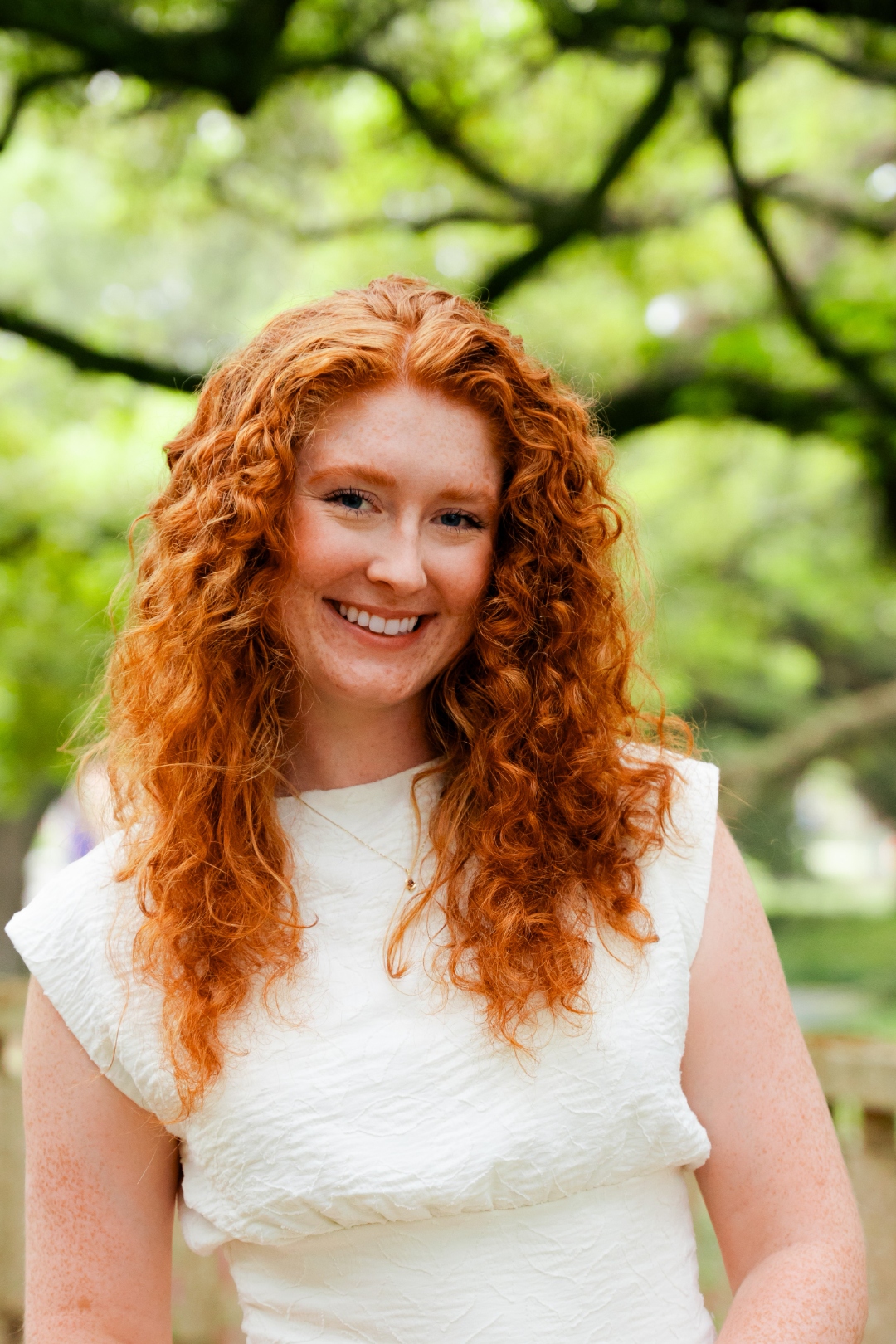
Taught live by
Catherine S · Top 1% instructor
Catherine S · Top 1% instructor
Who it's for
Free SAT content is everywhere. What's missing is someone who makes you actually use it.
🎓
Juniors targeting the March 6 SAT
The course is built backward from test day: weekend or school-day March test takers get a full prep cycle with the final class two days before the test.
🔥
Students who won't self-study
Free videos and question banks only work if you actually open them. A live class meets twice a week, checks your homework, and keeps you honest.
📚
Parents who want accountability
A set schedule, a named instructor, progress updates during the course, and a score-improvement guarantee. You always know where things stand.
Not for you if… you need fully private, flexible prep around a demanding schedule — our 1-on-1 SAT tutoring is the better fit, and our team will tell you so.
Outcomes & proof
Results families brag about.
+0
average SAT point gain (students prepping 2+ months)
0%
of students improve their score
0
rating across 340+ reviews
0
students taught since 2008
Nicki RodermanParent · Plano Senior High+410 SAT
My daughter received tutoring for SAT from Stuart. Her score increased enough that she was awarded a scholarship worth over $52,000. Thank you!
Cyrus HuncharekStudent · First Baptist Academy+320 SAT
I was struggling on my SAT scoring a 1720. After a 16 hour course with Varun I was ecstatic to see my score jump to a 2040. Highly recommend!
Dana McArthurParent · Lovejoy High+270 SAT
My daughter raised her SAT score 270 points! Because of Varun, she will be attending NYU in the Fall.
How it works
Ten weeks, one test day. Every step is scheduled.
Before Jan 5
Diagnostic test Our own diagnostic test, done at home before the first class, so session 1 starts with your actual numbers.
Tue/Thu, Jan 5 – Mar 4
18 live sessions Tuesdays and Thursdays, 7–9 PM Central on Zoom. Two hours of real teaching, twice a week.
4 Saturdays
Practice tests Jan 16, Jan 30, Feb 13, Feb 27 — full-length, on your own, on College Board's official Bluebook app, the same one you'll use on test day.
Thu, Mar 4
Final class Error-log review, test-day plan, and a registration check — two days before the test.
Sat, Mar 6
SAT test day You walk in rehearsed.
College Board deadline: register for the SAT yourself by Friday, February 19, 2027 (late registration Feb 23, extra fee). The course reminds you — but the registration is yours to complete.
The class-by-class curriculum.
Every class is 7:00–9:00 PM Central on Zoom, and every session starts with homework review. Practice tests are full-length Bluebook tests taken on your own on Saturday — then reviewed line-by-line in class. Click a week to open and close it.
Don your own
Our own diagnostic test, on your own, before the first class. Session 1 starts with your actual numbers, not guesses.
DiagnosticReviewed in class1Tue, Jan 5
How the adaptive digital SAT really works: two-stage modules, question difficulty, and what your score report means. We review every student's diagnostic, set up the error log each missed question gets tagged into, and map the ten-week plan. Math: Desmos basics — the questions the built-in calculator answers for you.
Diagnostic reviewTest mechanicsDesmos2Thu, Jan 7
Reading & Writing: Central Ideas & Details and Command of Evidence — read the question first, predict the answer before looking at choices. Math: linear equations and systems — setup speed, and when graphing in Desmos beats algebra by a minute. Timed drill sets your pacing baseline. Homework: two short sets, one per subject.
Reading & WritingMath3Tue, Jan 12
Homework review first, every question. Grammar: the punctuation rules behind most Standard English Conventions questions — commas, semicolons, colons, dashes. Math: quadratics and function notation. Timed drill with immediate review.
GrammarMath4Thu, Jan 14
Reading & Writing: transitions and rhetorical synthesis — the logic questions. Math: exponential growth and systems with tricky setups. We close with the game plan for Saturday's practice test: pacing, module-2 mindset, skip-and-return rules.
Reading & WritingMathTest planPTSat, Jan 16
Practice Test 1 — on your own. Full-length Bluebook test, taken on your own under test-day conditions. Reviewed line-by-line in Session 5.
Full-length BluebookReviewed in class5Tue, Jan 19
Practice Test 1 review: every missed question tagged — content gap, timing, misread, or careless — and re-drilled on the spot. Math: data analysis — ratios, rates, percentages, scatterplots, and reading data charts. This week's homework targets what the review exposed.
Test 1 reviewData analysis6Thu, Jan 21
Math: geometry and trigonometry — lines, angles, triangles, circles, similar figures, right-triangle ratios. Reading & Writing: Inferences and quantitative evidence — tying claims to charts and tables. Timed set with per-question pacing targets.
Geometry + trigReading & Writing7Tue, Jan 26
Error-log workshop: targeted mini-lessons on the class's top weak areas from the diagnostic and Test 1. Reading & Writing: words in context and precise word choice. Math: functions and graph interpretation. Strategy: elimination discipline — why wrong answers are written to look right.
Error-logReading & WritingMath8Thu, Jan 28
The adaptive format, played strategically: how module-2 difficulty changes your decisions, when to guess and move, banking easy points in module 1. Mixed timed set across everything so far. Homework: targeted sets plus your plan for Test 2.
Adaptive strategyMixed practicePTSat, Jan 30
Practice Test 2 — on your own. Full-length Bluebook test, test-day conditions. Reviewed in Session 9, with a score comparison against your diagnostic.
Full-length BluebookReviewed in class9Tue, Feb 2
Practice Test 2 review with error-log updates and your score-vs-diagnostic comparison. Reading & Writing: Craft & Structure — author's purpose, tone, and why the most-tempting answer is usually wrong. Homework: two precision sets.
Test 2 reviewCraft + structure10Thu, Feb 4
Math: advanced functions — transformations, nonlinear equations, systems with no solution. Timed drill under strict test pacing with skip-and-return discipline. Reading & Writing: rhetoric and redundancy — the concise-answer principle.
Advanced functionsRhetoric11Tue, Feb 9
Error-log workshop II: round two of targeted mini-lessons, driven by the class's actual error patterns across both tests. Strategy: the final five minutes of a section — guessing with a plan vs. grinding it out.
Error-logStrategy12Thu, Feb 11
The trap playbook: answer choices that are true but don't answer the question, half-right grammar fixes, Desmos roundoff traps. Mixed timed set, strict review, and an error-log audit before Test 3.
Trap playbookMixed practicePTSat, Feb 13
Practice Test 3 — on your own. Full-length Bluebook test, test-day conditions. Reviewed line-by-line in Session 13.
Full-length BluebookReviewed in class13Tue, Feb 16
Practice Test 3 review, then the full Desmos deep-dive: sliders, graphing for solutions, and the questions where Desmos is thirty seconds faster than algebra (and the ones where it's a trap). Grammar: concision and redundancy.
Test 3 reviewDesmosGrammar14Thu, Feb 18
Final new content — whatever the error logs still show, taught to mastery. Then a full timed Reading & Writing section and a full timed Math section under test conditions, immediately reviewed.
MathReading & Writing15Tue, Feb 23
Full rehearsal I: timed mixed sets at test length with instant review and an error-log audit. Strategy: energy and focus management across a two-hour-plus test.
RehearsalError-log16Thu, Feb 25
Full rehearsal II and final polish: pacing check, guessing strategy, and what to do when a question eats your time. Homework: Practice Test 4.
RehearsalFinal polishPTSat, Feb 27
Practice Test 4 — on your own. Full-length Bluebook test. Final review in Session 17, one week before the real thing.
Full-length BluebookReviewed in class17Tue, Mar 2
Practice Test 4 review. The test-day plan: Bluebook check-in, breaks, device and charger logistics, what to bring. We confirm every student's March 6 registration.
Test 4 reviewTest-day plan18Thu, Mar 4
Final class, two days before the test. Every error log audited one last time: the three things each student must remember on test day. Open Q&A. You walk in rehearsed.
Error-logQ&AStep inside a class
Try three questions straight from our SAT curriculum.
This is the actual library our students use — interactive lessons and practice questions for every Math and Reading & Writing topic on the test. Pick an answer to see how a Victory Prep instructor works it.
What is the sum of the solutions to x² − 4x − 12 = 0?
Why C: Factor it: (x − 6)(x + 2) = 0, so x = 6 or x = −2 — the sum is 4. Shortcut we drill in class: for x² + bx + c = 0, the sum of solutions is always −b. No factoring needed.
Scientists have long known that bees communicate the location of food sources through a complex series of movements called the “waggle dance.” _______ researchers recently discovered that bees also use vibrations transmitted through honeycombs to signal imminent threats to the hive.
Which choice completes the text with the most logical transition?
Why D: Sentence 1 establishes the waggle dance; sentence 2 adds a second, newly discovered method. That's addition — “Furthermore.” “For instance” would give an example of the waggle dance, not a new discovery. This is exactly the trap the SAT sets.
The following text is adapted from a 2021 report on urban farming initiatives.
For decades, urban farming was considered a fringe practice limited to rooftop gardens and community plots. But as cities face increasing pressure to reduce carbon emissions and improve food security, municipal governments have begun to _______ these projects, offering grants, zoning exemptions, and technical support to farms operating within city limits.
Which choice completes the text with the most logical and precise word?
Why B: The cities went from ignoring urban farms to offering grants, zoning exemptions, and technical support — active, enthusiastic support. That's “champion.” “Acknowledge” is too weak for grants and staff support; “tolerate” is the opposite of the passage's tone.
Every question you miss goes on your error log — and the next class targets exactly what you missed. That's how a +210 average happens.
What's included
Two ways to enroll.
Live
$899or $749 early-bird through Nov 30
- 18 live sessions — 36 hours, Tue/Thu 7–9 PM CT on Zoom
- Diagnostic test + score review in session 1
- 4 full-length Bluebook practice tests, taken on your own
- 1,000+ practice questions in our question bank
- Homework after every class, checked by your instructor
- Full access to our interactive SAT curriculum — every Math and Reading & Writing topic
- Desmos calculator training (a Victory Prep signature)
- Parent progress updates
- Free repeat of the next cohort if your score doesn't improve
Pay in full, or 2 installments — the second one month after the first.
Most popular
Live Plus
$1,299
- Everything in Live, plus:
- 4 hours of private 1-on-1 tutoring
- Point your 1-on-1 hours at the exact questions on your error log
- Use them for weak areas, catch-up after a missed class, or final-week polish
- Scheduled around you, with your own tutor
Pay in full, or 2 installments — the second one month after the first.
🛡
The score-improvement guarantee
If your score doesn't improve, you repeat the next cohort free. That's the deal in one sentence.
Course terms: cancel before the Jan 5 start for a refund minus a $150 admin fee. After the start date there's no cash refund — the remedy is the free-repeat guarantee. Written requests to solutions@victorysteponline.com, processed in 15–20 business days to the original payment method. (Our 60-day prorated refund applies to 1-on-1 tutoring, not this course.)
Your instructor
A top 1% instructor, live, twice a week.
Catherine S — Victory Prep instructor, top scorer, background-checked and trained in our full SAT curriculum.
Every Victory Prep instructor is in the top 1% of scorers for the tests they teach. We accept fewer than 1 in 20 tutor applicants, and every instructor is background-checked and trained in our curriculum. In this course, Catherine leads all 18 live sessions personally — the same drills, Desmos techniques, and error-log discipline our private students get, in a class of twelve.
Top 1%scorers only
<1 in 20applicants accepted
100%background-checked
FAQ
Straight answers.
What if I miss a class?
This is a live course, so be there if you can. If you miss one, you'll receive that session's materials and homework. Live Plus students can use their 1-on-1 hours to catch up with a tutor.
My school offers the SAT free during the school day — why pay for this?
You're not paying for the test. You're paying for live teaching, a plan, and accountability — the things free tools don't give you. And the course fits school-day testers too: the Texas school-day SAT window runs Mar 1–Apr 30, 2027, so everything you learn still lands in time.
What if my score doesn't improve?
You repeat the next cohort free. That's our guarantee.
Can I switch to 1-on-1 tutoring later?
Yes. If you start in the course and want private prep, ask us about the upgrade path — your course hours count toward your story, and we'll build the 1-on-1 plan around it.
Who registers me for the SAT?
You do, on College Board, by Friday, February 19, 2027 (late registration Feb 23, extra fee). The course sends reminders and checks your registration in the final week.
What are the payment options?
Pay in full, or split it into 2 installments — the first at enrollment, the second exactly one month later. No hidden fees; the price on this page is the price at checkout.
12 seats. One cohort. January 5.
Enrollment is open now and closes Sunday, January 3 — or when the 12 seats fill. Early-bird pricing ($749 for Live) ends November 30.
Live Online SAT CourseJan 5 – Mar 4 · 36 hrs · 12-student cap · $749 early-bird through Nov 30
Enroll